
Seren Collection proudly presents an exclusive collection of extremely rare natural fancy blue diamonds.
From soft sky-blue tones to deep, vivid ocean blues.
Our selection features some of the rarest and most prestigious gemstones in the world.
Natural blue diamonds are exceptionally scarce, making them highly coveted by collectors and investors alike.
All of our diamonds are certified by the Gemological Institute of America (GIA) the global authority in diamond grading and verification.
At Seren Collection, we offer only 100% natural diamonds and 100% naturally colored diamonds, with no treatments or enhancements ever.
To view an official GIA report for any of our diamonds, simply enter the certificate number at the link below:
👉 https://www.gia.edu/report-check

NATURAL FANCY BLUE DIAMONDS FOR SALE


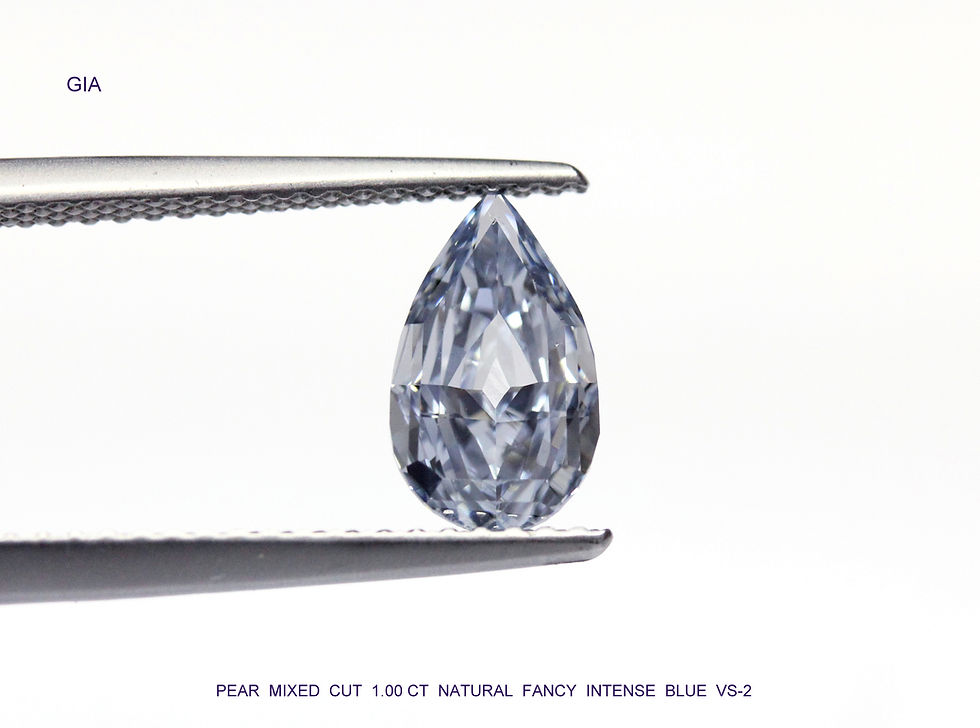


Natural Blue Diamonds: The Pinnacle of Rarity, Science, and Prestige
Natural blue diamonds represent one of the rarest and most enchanting classes of gemstones in the world. Celebrated for their breathtaking color, geological uniqueness, and historical significance, these exceptional diamonds have captured the fascination of royalty, collectors, scientists, and high-end jewelers alike.
From the legendary Hope Diamond to modern auction block marvels, blue diamonds remain symbols of elegance, mystery, and extraordinary value.
What Causes the Blue Color in Natural Diamonds?
The captivating blue color in natural diamonds is primarily the result of the presence of boron atoms within the diamond's crystal lattice. As light passes through the stone, the boron absorbs red, yellow, and green wavelengths of light, allowing blue light to dominate. The amount and distribution of boron influence the depth and saturation of the blue hue.
Unlike radiation-induced greens or deformation-caused pinks, the boron presence in blue diamonds is a chemical impurity incorporated during the diamond’s formation deep within the Earth’s mantle—making it both a geochemical and gemological rarity.
How Rare Are Natural Blue Diamonds?
Natural blue diamonds are exceedingly rare—even more so than pink or yellow diamonds. Only a minute fraction of all diamonds mined annually possess a natural blue hue. The Cullinan Mine (formerly Premier Mine) in South Africa is the most significant known source, although production is extremely limited.
Color intensity, size, clarity, and saturation dramatically affect a blue diamond’s value. Stones that are graded Fancy Vivid Blue by the Gemological Institute of America (GIA) command the highest prices, often exceeding those of white diamonds by a substantial margin.
Famous Natural Blue Diamonds
Some of the most legendary and valuable diamonds in history are blue:
-
The Hope Diamond – A 45.52-carat Fancy Dark Grayish Blue diamond housed in the Smithsonian Institution, famed for its deep color and mysterious past.
-
The Blue Moon of Josephine – A 12.03-carat Fancy Vivid Blue diamond that sold for $48.5 million in 2015.
-
The Oppenheimer Blue – A 14.62-carat Fancy Vivid Blue diamond that fetched over $57 million at auction.
These diamonds not only reflect unmatched natural beauty but also serve as historical and scientific artifacts of immense value.
Natural Blue Diamonds vs. Treated and Lab-Grown Alternatives
Due to their rarity and high demand, the market includes treated and lab-grown blue diamonds, which are far more accessible but significantly less valuable.
-
Treated diamonds are typically irradiated or heat-treated to induce a blue appearance.
-
Lab-grown diamonds may be synthesized with boron to mimic natural blue diamonds.
Only advanced gemological analysis—including spectroscopy and boron detection—can confirm a blue diamond’s natural origin. Reputable laboratories like GIA provide this verification with detailed certificates specifying the diamond’s color origin and grading.
Market Value and Investment Appeal
Natural blue diamonds, particularly those with Fancy Intense or Fancy Vivid color grades, are among the most expensive gemstones ever sold. Their scarcity, combined with enduring demand, has made them not only objects of desire but also highly strategic investment assets.
Unlike many commodities, high-quality blue diamonds tend to appreciate over time, especially those with documentation and provenance. Their performance in auctions consistently breaks records, often fetching millions per carat.
Use in Fine and Bespoke Jewelry
High-end jewelers and luxury brands increasingly incorporate natural blue diamonds into exclusive collections and one-of-a-kind pieces. Their mesmerizing hue pairs beautifully with platinum, white gold, or contrasting color stones such as pink diamonds.
Because of their elegance and rarity, blue diamonds are often reserved for custom engagement rings, royal regalia, or investment-grade heirlooms. Each piece serves as a statement of taste, legacy, and sophistication.
Ethical Sourcing and Certification
Given the high value and limited availability of natural blue diamonds, ethical sourcing and certification are essential. Buyers should insist on:
-
GIA certification confirming natural origin and untreated status.
-
Traceable sourcing information from jewelers who uphold responsible mining and trade practices.
Ethical concerns surrounding conflict diamonds have led to increased transparency and supply chain accountability in the diamond industry. Blue diamonds from reputable sources help support sustainability and fair labor practices.
Conclusion
Natural blue diamonds are among nature’s rarest and most stunning creations. Their formation, involving boron inclusion under precise geological conditions, gives rise to a gem that is as scientifically fascinating as it is visually extraordinary.
Whether cherished as a timeless jewel, acquired as a secure investment, or celebrated for its rarity, a natural blue diamond remains an enduring symbol of excellence, wonder, and refined luxury.
